
Short answer
Bicycle light requirements in Australia are set by each state and territory. A rider generally needs a white front light and a red rear light when riding at night or in hazardous weather, and a red rear reflector is also commonly required. This page gives a checklist of the fields to verify on an official government source. It deliberately publishes no penalty amounts, section numbers or commencement dates.
Verification status: not yet complete. Every cell in the table below says “Check official page” until a person has read the current state source and recorded the date. This page must not be published as a compliance reference before that step.
Why we do not fill in the numbers
During our research we found a penalty figure in an aggregator article that we could not reproduce on the Queensland government page it cited. That page states equipment requirements but does not show a penalty amount. Publishing an unverified fine would be worse than publishing no figure at all.
The checklist
| State / territory | White front light | Red rear light | Red rear reflector | Flashing mode allowed | Official source | Verified on |
|---|---|---|---|---|---|---|
| NSW | Check official page | Check official page | Check official page | Check official page | https://www.transport.nsw.gov.au/roadsafety/bicycle-riders | Not yet verified |
| VIC | Check official page | Check official page | Check official page | Check official page | https://transport.vic.gov.au/road-and-active-transport/active-transport/bicycle-riders | Not yet verified |
| QLD | Check official page | Check official page | Check official page | Check official page | https://www.qld.gov.au/transport/public/bicycle-riding/safety/helmets-and-equipment | Not yet verified |
| SA | Check official page | Check official page | Check official page | Check official page | https://www.sa.gov.au/topics/driving-and-transport/cycling | Not yet verified |
| WA | Check official page | Check official page | Check official page | Check official page | https://www.wa.gov.au/organisation/department-of-transport/cycling-safety | Not yet verified |
| TAS | Check official page | Check official page | Check official page | Check official page | https://www.transport.tas.gov.au/road_safety/cyclists | Not yet verified |
| ACT | Check official page | Check official page | Check official page | Check official page | https://www.transport.act.gov.au/travel-options/walking-and-cycling | Not yet verified |
| NT | Check official page | Check official page | Check official page | Check official page | https://nt.gov.au/driving/safety/cyclist-safety | Not yet verified |
Fields a rider should confirm
- Whether a front light must show white and from what distance it must be visible.
- Whether a rear light must show red, and whether a rear reflector is required in addition.
- Whether flashing modes are permitted, and for which lamp.
- Whether the rule applies at night only or also in rain, fog or low visibility.
- Whether helmet and reflective-clothing requirements are separate from lighting.
What this means for a light set
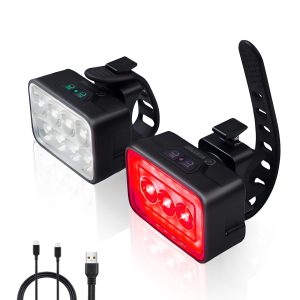
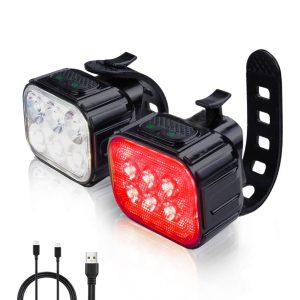
A front and rear set with a stated ingress rating covers the hardware side of the checklist; it does not by itself make a ride compliant. Confirm the current rule for the state you ride in, then check that both lamps are charged, mounted at the right height and visible from behind. A light set is for being seen as well as for seeing the road, and those are different requirements.
Frequently asked questions
Is a flashing rear light legal in Australia?
This varies by jurisdiction and by how the rule is written. Check the official page for the state you ride in before relying on a flashing mode. We do not publish a yes or no answer here.
Do I need lights during the day?
Some rules refer to hazardous weather or low visibility rather than darkness alone. Check the state source; a daytime running light is a practical choice regardless of the minimum rule.
Does this page list fines?
No. Penalty amounts and section numbers are excluded until each one is verified against the current government source by a person and dated.
Sources and disclaimer
- NSW: https://www.transport.nsw.gov.au/roadsafety/bicycle-riders (official government page; content not yet transcribed)
- VIC: https://transport.vic.gov.au/road-and-active-transport/active-transport/bicycle-riders (official government page; content not yet transcribed)
- QLD: https://www.qld.gov.au/transport/public/bicycle-riding/safety/helmets-and-equipment (official government page; content not yet transcribed)
- SA: https://www.sa.gov.au/topics/driving-and-transport/cycling (official government page; content not yet transcribed)
- WA: https://www.wa.gov.au/organisation/department-of-transport/cycling-safety (official government page; content not yet transcribed)
- TAS: https://www.transport.tas.gov.au/road_safety/cyclists (official government page; content not yet transcribed)
- ACT: https://www.transport.act.gov.au/travel-options/walking-and-cycling (official government page; content not yet transcribed)
- NT: https://nt.gov.au/driving/safety/cyclist-safety (official government page; content not yet transcribed)
This page is general information, not legal advice. Road rules change; the relevant state or territory authority is the source of truth. Last reviewed: 2026-11-04 (AEDT) — checklist only, no rule text verified.
Last checked: 6 November 2026. This page is an index to official state and territory sources, not legal advice; we do not restate fines or clauses as conclusions. Check the current rules in your state before you ride.