
Every Australian state and territory requires lights on a bicycle ridden at night. The wording differs slightly, but the substance is the same: a white light at the front and a red light at the rear, each visible for at least 200 metres. Here is what that requirement actually means when you are buying a light, and the two mistakes riders make most often.
The requirement, in plain terms
| Front | White light, visible for at least 200 metres, mounted on the bike or the rider. |
|---|---|
| Rear | Red light, visible for at least 200 metres. A red reflector is also required in most states, and most rear lights include one. |
| When | Between sunset and sunrise, and in weather that reduces visibility enough to need it. |
| Where | Roads, bike lanes and shared paths. “I was on the path, not the road” is not a defence. |
What 200 metres means in lumens
Visibility distance and lumen output are not the same measurement, which is why the numbers on the box do not line up with the law. As a working rule for a bike light:
- Under 100 lumens — enough to be seen in a lit street, marginal for a 200 metre requirement on an unlit road.
- 200 to 400 lumens — the practical range for commuting. Enough to be seen at well over 200 metres, and enough light to see the road surface on an unlit path.
- 600 lumens and up — for unlit descents and off-road. On a shared path this is anti-social: it dazzles oncoming riders and pedestrians.
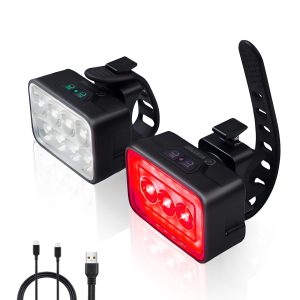
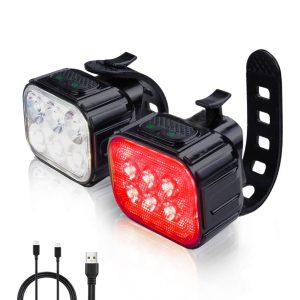
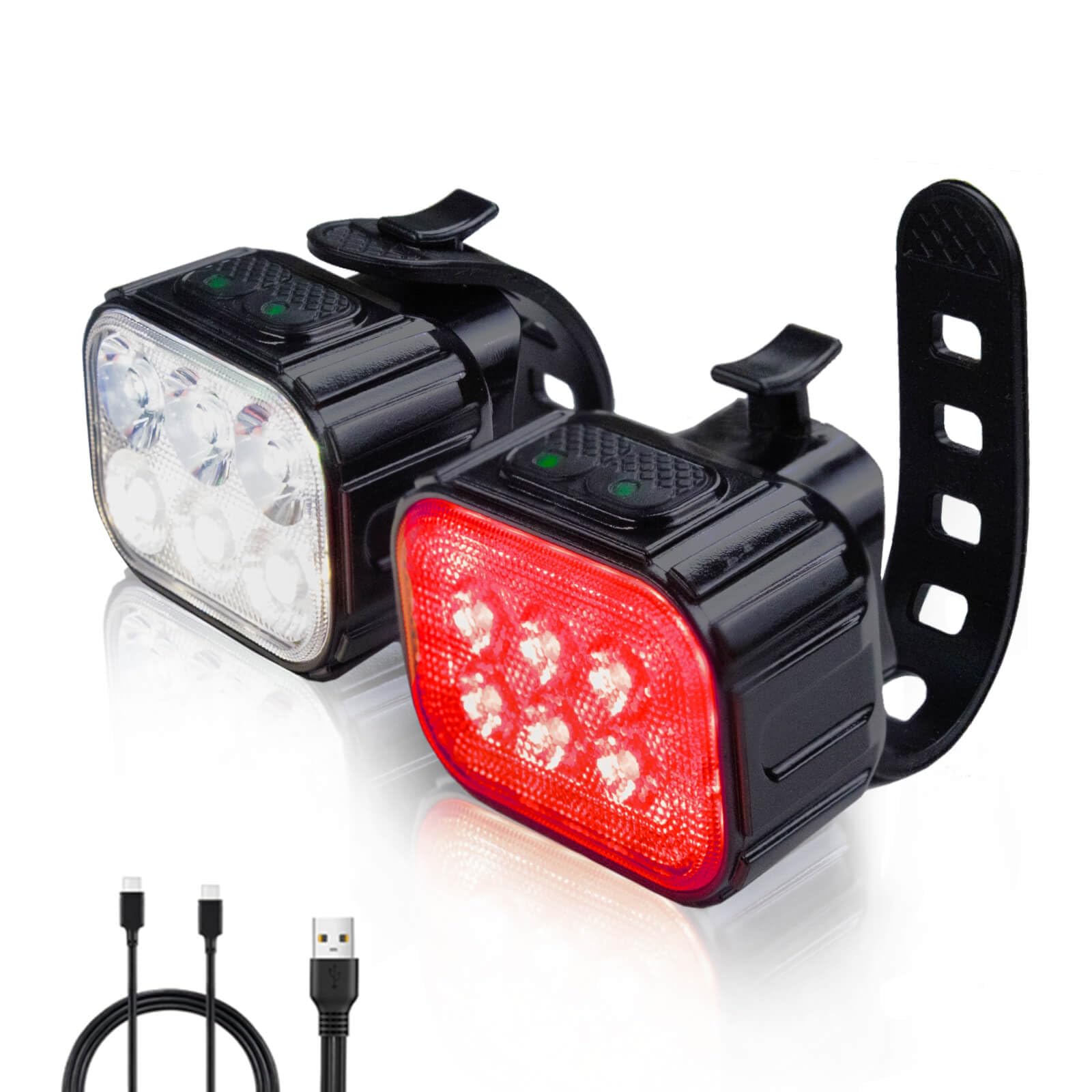
Our 300-lumen front light and 50-lumen rear light sit in that commuting range. The rear light matters more than most riders expect — a driver approaching from behind has your speed and position to judge, and a bright rear light is what gives them the extra second.
Are flashing modes legal?
Yes, in every Australian state and territory, as long as the light is visible for the required distance. There is no rule that says the light must be steady.
A flashing rear light is more noticeable than a steady one in traffic, because the change in brightness catches the eye at the edge of vision. The trade-off is that a flash makes it harder for a driver to judge your distance, so many riders run one steady and one flashing rear light, or use steady mode in traffic and flashing on quiet roads.
Mistake one: aiming the light too high
A 300-lumen light pointed straight ahead at car height is a weapon. On a shared path it blinds everyone coming the other way, and on the road it does the same to drivers. Aim the top of the beam to hit the road about 10 to 15 metres ahead, so the cut-off sits below a driver’s eye line.
Mistake two: a dead battery
The most common reason a rider gets caught without lights is not forgetting them, it is a battery that was flat from the last ride. Two habits fix it:
- Charge after every ride, not before the next one. A light on the charger is a light you will not forget.
- Keep a small backup on the bike — a 20-gram clip light weighs nothing and gets you home.
USB-C charging removes one more excuse: the same cable as your phone, your computer and most modern lights.
What to look for when buying
- Runtime at the setting you will actually use, not the eco mode nobody rides in.
- A mount that survives — silicone straps are simple, rattle-free, and move between bikes in seconds.
- Water resistance rated for rain, not for submersion. A seatpost-mounted rear light takes road spray directly.
- A rear light as bright as the front one relative to its job — 50 lumens at the rear is a real light, 10 lumens is a decoration.
See the light sets — USB-C rechargeable, front and rear in one box, with runtime listed per mode.



Have a question?