
Most bike locks are sold on a number that does not matter: the number of digits in the combination, or how thick the cable looks in a photo. Neither tells you how long the lock survives an attack. Here is what actually decides it, and how to spend the least money for the security you need.
The three lock types, and what each one really stops
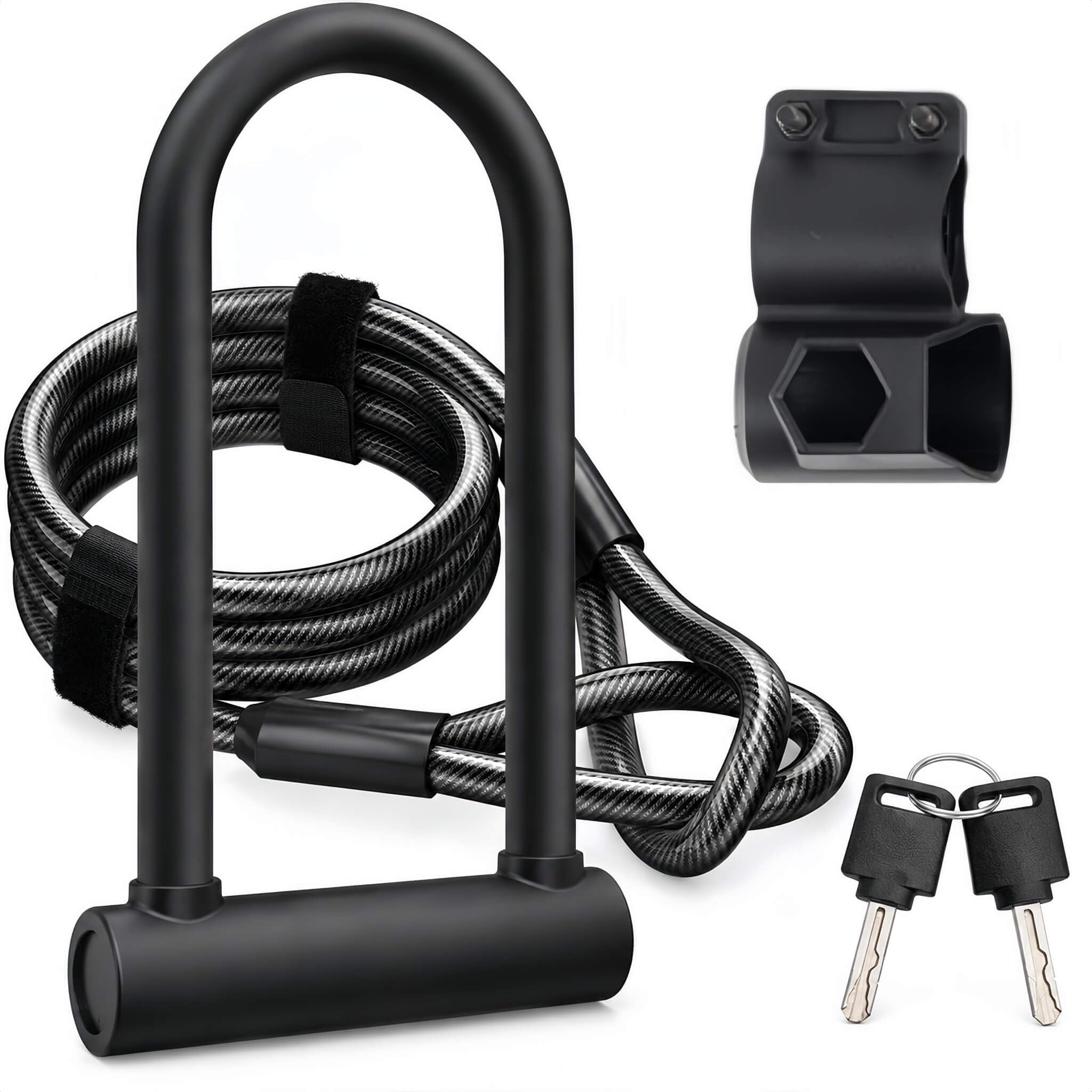
| U-lock | A rigid 19mm hardened steel shackle that locks into the body at both ends. An attacker has to cut twice, and cannot twist the shackle against the ground. The strongest option per dollar, and the heaviest. |
|---|---|
| Chain lock | Hardened steel links, usually 6 to 8mm, inside a fabric sleeve. No rigid point to brace against, and long enough to wrap frame, wheel and post together. Heavier than a cable, more flexible than a U-lock. |
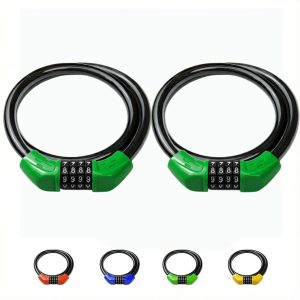
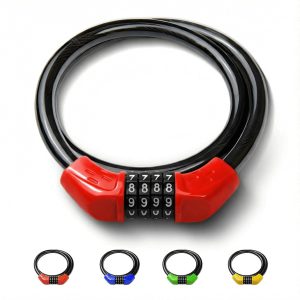
| Cable lock | Braided steel inside PVC. Stops the opportunist who wheels away an unlocked bike. Does not stop cable cutters. Light and cheap, which is exactly why it belongs as a second lock rather than the only one. |
If you take one thing from this page: a cable on its own is not a lock, it is a reminder. The realistic setup for a commuter bike is a U-lock or chain on the frame, plus a cable through the wheels.
Lock length: buy for where you park, not for the spec sheet
Every extra centimetre adds weight and price. Match the length to the thing you actually lock to:
- 65cm — frame plus a fixed rack, or frame plus one wheel on a short post. Packs into a bag.
- 100–103cm — the all-rounder. Frame, one wheel and a post with a bit of slack, which is what most street parking looks like.
- 120cm — two bikes, or a thick post, a frame and both wheels.
If you are between two sizes, go longer. A lock that does not reach the post is a lock that stays in the bag, and an unused lock protects nothing.
Combination or key?
A five-digit combination gives 100,000 possible codes. That is comparable to a basic keyed cylinder, and it cannot be bumped or picked. The costs are real though: a forgotten code cannot be recovered — there is no master key, because a master key would open every lock of that model — and a lock left somewhere quiet for long enough can be worked through dial by dial.
The practical split: combination if you commute and do not want a key on your ring; keyed if the bike sits in the same place every day, where an attacker has time.
What the marketing numbers do not tell you
- “Cut-proof” does not exist. Every lock can be cut. The question is how many minutes and how many blades it costs.
- Cable diameter is not security. A 10.5mm cable looks serious and cuts in seconds. The braid resists pulling, not cutters.
- Weight is the honest spec. A 19mm U-lock is heavy because the steel is real. A 400-gram lock claiming the same resistance is claiming something else.
How long are you leaving the bike?
This is the only question that matters, and it decides the answer more than budget does.
| Under 15 minutes | A cable through frame and wheel is enough, if the bike is in sight. |
|---|---|
| An hour or two | U-lock on the frame to a fixed rack, cable through the wheels. |
| All day, every day | U-lock plus chain, both to fixed points, and take the front wheel or a light with you. |
| Overnight outdoors | No lock is enough on its own. Two different lock types, in a lit place, and nothing quick-release left on the bike. |
Where to spend, and where not to
Spend on the shackle or the chain, because that is what gets attacked. Do not spend on a lock that is heavier than you will carry, or on a second cable you will not use. A $13 combination cable lock that lives on the frame and gets used every day beats a $120 U-lock that stays at home because it does not fit in a bag.
One more thing: lock it properly
The strongest lock fails if it goes around the front wheel only, or around a post that lifts out of the ground. Pass the shackle through the frame triangle and the rear wheel, and lock to something that is bolted down and taller than the lock. In most Australian cities the rack outside a train station is a better anchor than the signpost next to it.
See the full lock range — U-locks, chain locks and combination cables, with the length and weight of each one listed plainly.



Have a question?