

Short answer
This page addresses the question “combination bike lock won’t open with correct code” for Australian riders. It is not a product ranking; it is a check of fit, specification and failure mode for a 120cm resettable cable lock. It draws on 983 competitor reviews collected for this site and contains no independent bench testing, no security rating and no unverified rule or penalty figure.
Last verified: 2026-11-04 (AEDT). Specifications are listing transcriptions, not test results. Search volume and ranking data are not available for this page.
Key facts you can check
| Field | What we can state | How to check it |
|---|---|---|
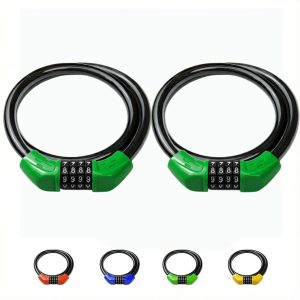
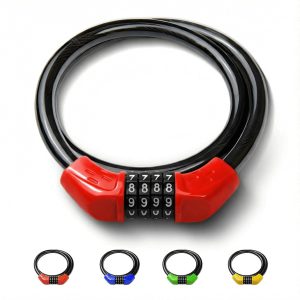
| Subject | 5-Digit Resettable Cable Lock 120cm | Measure on your own bike |
| First check | A 120cm braided steel cable gives more reach than a 65cm coil. | Listing specification, as at 2026-11-04 (AEDT) |
| Key measurable terms | 120cm, braided steel, resettable, coiled | Tape measure, scales, or valve/wheel check |
| Typical situation | commuting, campus racks and longer reach around a frame | Your own parking time and location |
| Review sample | 983 competitor reviews | Corpus text match, not a defect rate |
| Independent testing | None on this page | We do not run a test programme |
Where a figure comes from a government or industry source, the source and the date it was checked appear at the end of this page.
What problem are you actually solving
“Cannot unlock even with correct code. Only used for a few months.”
That is review UGC-00485 from our sample, quoted verbatim. It describes a competitor product, not our own. The pattern behind it is what this page explains.
The cost of a mismatch is rarely the purchase price. It is the repeated five minutes spent fighting with equipment at the rack.
Riders rarely complain about the headline feature. They complain about the small part that failed while the main feature still worked.
We treat a reported failure as a description of what the rider observed. Working out why it happened is a separate step, and it starts with the fit.
The three failure modes worth checking first
1. Fit and alignment
Fit the part loosely, align it, then tighten in stages. Repeat the full cycle and watch for movement at the contact points.
That leads to a narrower question: which of these fields can you verify without specialist tools?
2. Mechanism and reset
Note the valve or wheel size on your bike, then compare it with the compatibility line. Do this before the packaging is discarded.
The next section separates the measurable specification from the surrounding claims.
3. Wear after several weeks
Charge or cycle the device fully once, then test it again after a week. Several buyer reports describe a fault appearing in that interval.
Once the fit is settled, the remaining uncertainty is about behaviour over time rather than dimensions.
A checklist cannot tell you what a thief will do. It can only remove the avoidable mistakes from your own setup.
Specifications that matter
Check the measurable specifications first: A 120cm braided steel cable gives more reach than a 65cm coil. That single detail changes how the device behaves at a crowded rack.
The listed construction is The combination is resettable without a key. Compare that against where you park, not against a marketing claim about overall strength.
Look for 120cm and braided steel in the listing. These are the fields a buyer can actually verify on delivery with a tape measure or a set of scales.
| Specification | Listed value | Why it matters |
|---|---|---|
| 120cm | A 120cm braided steel cable gives more reach than a 65cm coil. | Check against your bike and where you park |
| braided steel | The combination is resettable without a key. | Check against your bike and where you park |
| resettable | The cable coils around the frame or fits into a small bike bag. | Check against your bike and where you park |
Rigid and flexible designs solve different geometry problems. One resists at a point; the other reaches around several objects.
A gauge helps at home where there is time to read it. On the roadside, a compact head that seals first is usually more useful.
Related products:
- View 5-Digit Resettable Cable Lock 120cm — product details
- View 5-Digit Combination Chain Lock 1m — product details
- 4-Digit Combination Cable Lock 103cm — product page & restock status
What buyers actually report
The wording in “Great lock compact and easy to use.” (UGC-00221) is typical of a symptom report: it describes what happened, not why it happened.
“Great lock compact and easy to use.” — UGC-00221, 4 star, Amazon US, 2025-09-23
The phrase points to a fit or mechanism issue. Both are testable at home before any replacement is considered.
“This is good, but the chain stays together by velcro.” — UGC-00255, 4 star, Amazon US, 2025-04-17
Keep the original wording when you contact a seller. A paraphrase tends to lose the detail that identifies the fault.
“My $500 bike was stolen in less than 10 seconds.” — UGC-00267, 1 star, Amazon US, 2025-01-20
This wording is useful because it is specific about when the fault appeared, not just that something was disappointing.
This page uses the 983-review corpus qualitatively; the exact phrase “combination bike lock won’t open with correct code” is not quantified because a phrase match would not be a reliable measure of how common the problem is.
Buying the strongest item and leaving it at home is a common outcome. Portability belongs in the decision, not as an afterthought.
The vocabulary buyers use
In the 573-paragraph corpus of real cycling articles behind this site, the “tools & attack methods” word group appears most often in specification, comparison and problem paragraphs. These terms are counted from actual article text, not suggested by a keyword tool; none of them represents a search-volume estimate.
| Term observed | Occurrences in this paragraph role | Distinct articles |
|---|---|---|
| tools | 3 | 3 |
| cutters | 3 | 2 |
| cut | 3 | 2 |
| bolt cutters | 2 | 2 |
| cut | 2 | 2 |
| seconds | 2 | 2 |
Treat this as vocabulary evidence only. It tells you how the topic is written about, not how often it is searched, and it carries no ranking or traffic estimate.
Checks to run before you commit
- Note the valve or wheel size on your bike, then compare it with the compatibility line. Do this before the packaging is discarded.
- Charge or cycle the device fully once, then test it again after a week. Several buyer reports describe a fault appearing in that interval.
- Keep a short written record: the date, the measured dimension, and what happened on the tenth cycle. It makes a return conversation simple.
Australian conditions and everyday scenarios
For a workplace cage that only fits one bike at a time, check the reach with the bike actually leaning against the rack, not propped upright in a hallway.
Consider a station rack during a Sydney or Melbourne commute. Moisture and grit reach the mechanism well before they affect the frame, so cleaning belongs in the routine.
A dated specification is more useful than a confident adjective. The first can be checked; the second cannot.
Related checks on this site
- specification and availability for 5-digit resettable cable lock 120cm
- when a cable is not enough — upgrade path
- shorter 103cm option — variant comparison
- what 983 competitor reviews say about failure patterns
- how we describe lock capability without claiming a rating
- How to Choose 5 Digit Bike Lock for Australian Riders
- Bike Chain in Australia: A Practical Checklist
- How to Choose Locks Chains for Australian Riders
Frequently asked questions
Why did it work at first and then stop working?
Check the compatibility line and your own frame first. If both agree, the remaining risk is usually the mounting surface.
Does the listing specification match what I should measure on the bike?
It depends on how long the bike is left and where. A short stop in a busy place and an overnight park on a quiet street are different problems.
Where we quote a review, the review id is printed beside it so the wording can be checked against the source corpus.
What is the difference between a fit problem and a faulty part?
Check the fit and the mechanism first, because most reported faults are installation or reset issues rather than broken components.
How should I maintain the mechanism in Australian conditions?
No. A specification describes a design limit, not a guarantee of performance in a particular situation or over a particular period.
Sources, method and last verified
- Review corpus: 983 competitor reviews supplied for this site; quoted excerpts are verbatim and identified by review id. See the method page.
- BikeRadar, Do you run tubeless tyres? This is what to do if your tyres fail — https://www.bikeradar.com/advice/how-to-repair-tubeless-puncture
- Cycling UK, Video: How to fix a puncture on a road bike and mountain bike — https://www.cyclinguk.org/article/technical-guide/video-repair-puncture
- Cycling Weekly, Best Bike Lights 2026: reviewed by experts — https://www.cyclingweekly.co.uk/group-tests/best-front-lights-under-100-143490
- Product specifications: retailer listing transcription, checked 2026-11-04 (AEDT).
Specifications on this page are transcribed from the retailer listing as at 2026-11-04 (AEDT). They are not the result of independent testing.
Review excerpts are quoted verbatim from a corpus of competitor reviews supplied for this site. They describe third-party products, not our own.
We do not claim any third-party security rating, certification or endorsement for our own products.
Last verified: 2026-11-04 (AEDT). Search volume, keyword difficulty and AI citation rate: not available (TBD).
The short version
The decision becomes simple once the three inputs are written down: time, place and value. Everything after that is a measurement.
Related products:
- View 5-Digit Resettable Cable Lock 120cm — product details
- View 5-Digit Combination Chain Lock 1m — product details
- 4-Digit Combination Cable Lock 103cm — product page & restock status



Have a question?