
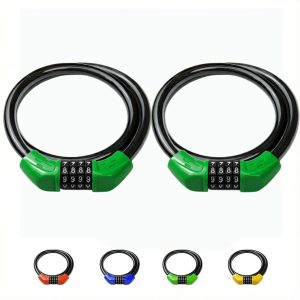
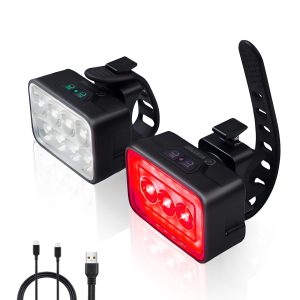
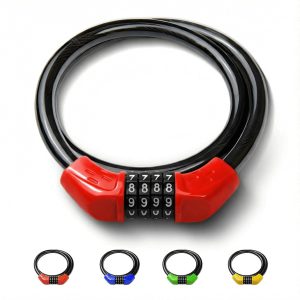
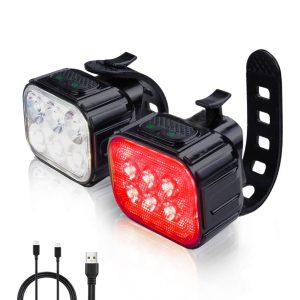

Short answer
This page addresses the question “lock seatylock” for Australian riders. It is not a product ranking; it is a check of fit, specification and failure mode for a 65cm five-digit cable lock. It draws on 983 competitor reviews collected for this site and contains no independent bench testing, no security rating and no unverified rule or penalty figure.
Last verified: 2026-11-04 (AEDT). Specifications are listing transcriptions, not test results. Search volume and ranking data are not available for this page.
Key facts you can check
| Field | What we can state | How to check it |
|---|---|---|
| Subject | 5-Digit Cable Lock 65cm (5 Colours + Twin Pack) | Measure on your own bike |
| First check | A 65cm braided steel cable suits short stops and secondary locking. | Listing specification, as at 2026-11-04 (AEDT) |
| Key measurable terms | 65cm, braided steel, resettable, five colour | Tape measure, scales, or valve/wheel check |
| Typical situation | short stops, secondary locking and front-wheel loops | Your own parking time and location |
| Review sample | 983 competitor reviews | Corpus text match, not a defect rate |
| Independent testing | None on this page | We do not run a test programme |
Where a figure comes from a government or industry source, the source and the date it was checked appear at the end of this page.
What problem are you actually solving
Riders often discover the limit of a 65cm five-digit cable lock on a wet Tuesday, not in a product comparison. That is the situation this page starts from.
The mistake is usually not buying a cheap product. It is buying the right product for the wrong parking situation, then blaming the product.
Riders describe the same frustration in different words: it worked fine, then it did not, and there was no obvious reason why.
By lock seatylock we mean the practical decision of matching a specification to a parking situation, not a ranked list of products.
Rules and how to check them
Australian road rules for bicycle lights are set by each state and territory. The checks below list only fields a rider can verify on an official government page; no penalty amount, section number or commencement date appears on this page because those must be confirmed state by state by a person before publication.
| State or territory | White front light | Red rear light | Rear reflector | Flashing mode | Official source | Verified |
|---|---|---|---|---|---|---|
| QLD | Check official page | Check official page | Check official page | Check official page | https://www.qld.gov.au/transport/public/bicycle-riding/safety/helmets-and-equipment | Not yet verified |
| NSW | Check official page | Check official page | Check official page | Check official page | https://www.transport.nsw.gov.au/roadsafety/bicycle-riders | Not yet verified |
| VIC | Check official page | Check official page | Check official page | Check official page | https://transport.vic.gov.au/road-and-active-transport/active-transport/bicycle-riders | Not yet verified |
| SA | Check official page | Check official page | Check official page | Check official page | https://www.sa.gov.au/topics/driving-and-transport/cycling | Not yet verified |
| WA | Check official page | Check official page | Check official page | Check official page | https://www.wa.gov.au/organisation/department-of-transport/cycling-safety | Not yet verified |
This page is general information, not legal advice. Road rules differ between Australian states and territories; check the relevant state transport authority before you ride.
Specifications that matter
Look for 65cm and braided steel in the listing. These are the fields a buyer can actually verify on delivery with a tape measure or a set of scales.
Specifications worth checking are 65cm, braided steel and resettable. Anything else on the box should be treated as a claim until you have measured it.
The difference between two similar products is often one dimension rather than one material. A 65cm braided steel cable suits short stops and secondary locking.
| Specification | Listed value | Why it matters |
|---|---|---|
| 65cm | A 65cm braided steel cable suits short stops and secondary locking. | Check against your bike and where you park |
| braided steel | Five colour variants are listed, plus twin-pack variants. | Check against your bike and where you park |
| resettable | The combination is resettable, so there is no key to lose. | Check against your bike and where you park |
| five colour | At 65cm the cable may not reach a frame, both wheels and a rack at once. | Check against your bike and where you park |
A cable is light and flexible but has little resistance to a determined cut. A chain adds hardened steel links at the cost of weight in a backpack.
A keyed mechanism has no code to forget but a key to lose. A combination mechanism has no key to lose but a reset step that can go wrong.
Related products:
- View 5-Digit Cable Lock 65cm (5 Colours + Twin Pack) — product details
- View 5-Digit Resettable Cable Lock 120cm — product details
- View Heavy Duty U-Lock 19mm with Cable — product details
What buyers actually report
One rider put it plainly: “No picture to attach because someone stole bicycle while it was locked up using this!” That is review UGC-00272 from the sample used on this site, quoted verbatim.
“No picture to attach because someone stole bicycle while it was locked up using this!” — UGC-00272, 2 star, Amazon US, 2025-01-02
Notice that the report names a symptom and a timeframe, but not a cause. That is the honest starting point for a diagnosis.
“i feel like i just left my bike out with no chain, theif cut the cable in one cut, dont buy unless ur using it for anything other” — UGC-00326, 1 star, Amazon US, 2022-07-18
Read this as one buyer’s observation. It is evidence of a question worth checking, not evidence of a defect rate.
“Our bike was stolen after thieves easily cut the included cable.” — UGC-00142, 2 star, Amazon US, 2026-06-19
Two reports using similar language suggest a shared failure mode, but they still do not establish how often it occurs.
This page uses the 983-review corpus qualitatively; the exact phrase “lock seatylock” is not quantified because a phrase match would not be a reliable measure of how common the problem is.
A higher specification does not remove the need to lock the frame as well as the wheel. Technique still decides most short-stop outcomes.
The vocabulary buyers use
In the 573-paragraph corpus of real cycling articles behind this site, the “lights & regulations” word group appears most often in specification, comparison and problem paragraphs. These terms are counted from actual article text, not suggested by a keyword tool; none of them represents a search-volume estimate.
| Term observed | Occurrences in this paragraph role | Distinct articles |
|---|---|---|
| bicycle electric | 3 | 1 |
| wear | 2 | 2 |
| light | 4 | 4 |
| front | 3 | 2 |
| night | 5 | 5 |
| lights riding | 2 | 2 |
Treat this as vocabulary evidence only. It tells you how the topic is written about, not how often it is searched, and it carries no ranking or traffic estimate.
Checks to run before you commit
- First, confirm the fit on the bike while it is stationary. Second, repeat the full open-and-close cycle ten times. Third, check for play in the mount.
- Test the mechanism before the return window closes, then test it again after a week of real use. Record the date and the result, not just the impression.
- Remove the part, clean the contact surfaces, refit to the specified torque or position, and only then decide whether the fault is the product or the fit.
Australian conditions and everyday scenarios
For a shared garage in a small unit block, the practical constraint is reach rather than raw strength. Measure the distance from the rack to the frame before choosing a length.
Consider a coastal ride where salt spray reaches every bolt. Salt, rain and repeated handling affect the mechanism long before they affect the steel, so check the cylinder and sleeve too.
If you only need a deterrent, treat any claim of total protection with suspicion. No device removes the need to choose where you park.
Related checks on this site
- specification and availability for 5-digit cable lock 65cm (5 colours + twin pack)
- need more cable length than 65cm — upgrade path
- pair it with a U-lock — pairing
- if you would rather not remember a code — same-tier alternative
- what 983 competitor reviews say about failure patterns
- how we describe lock capability without claiming a rating
- the state-by-state light rules checklist
- Folding Locks Chains: What to Check Before You Buy
Frequently asked questions
How do I know which size or length I need?
Measure it on the bike with the rack you use, and keep a little margin. A dimension that only just fits will not fit on a different rack.
What should I check before the return window closes?
Test every function on the day it arrives and again a week later, while the return window is still open.
Where we quote a review, the review id is printed beside it so the wording can be checked against the source corpus.
Is a higher specification always the better choice?
Only if the constraint is the same one. A specification that suits a home workshop may be a poor fit for a roadside repair.
Can I fit this to my bike without changing other parts?
Check the compatibility line and your own frame first. If both agree, the remaining risk is usually the mounting surface.
Sources, method and last verified
- Review corpus: 983 competitor reviews supplied for this site; quoted excerpts are verbatim and identified by review id. See the method page.
- The Gear Route affiliate roundup, 6 Strongest Bike Locks of 2026 — https://thegearroute.com/strongest-bike-locks
- ProductReview.com.au user reviews, Kryptonite New York Faghettaboudit Bike Lock reviews — https://www.productreview.com.au/listings/kryptonite-new-york-faghettaboudit-bike-lock
- GameDayGrade review site, Kryptonite 3ft Chain Lock Review — https://gamedaygrade.com/kryptonite-3ft-chain-lock-review-unpacking-the-steel-sentinel-for-your-wheels/
- Product specifications: retailer listing transcription, checked 2026-11-04 (AEDT).
Specifications on this page are transcribed from the retailer listing as at 2026-11-04 (AEDT). They are not the result of independent testing.
Review excerpts are quoted verbatim from a corpus of competitor reviews supplied for this site. They describe third-party products, not our own.
We do not claim any third-party security rating, certification or endorsement for our own products.
Last verified: 2026-11-04 (AEDT). Search volume, keyword difficulty and AI citation rate: not available (TBD).
The short version
Go back to the situation you started with. Once the parking time, the location and the value of the bike are fixed, the specification usually picks itself.
Related products:
- View 5-Digit Cable Lock 65cm (5 Colours + Twin Pack) — product details
- View 5-Digit Resettable Cable Lock 120cm — product details
- View Heavy Duty U-Lock 19mm with Cable — product details



Have a question?