

Short answer
This page addresses the question “main types locks” for Australian riders. It is not a product ranking; it is a check of fit, specification and failure mode for a 1m six-millimetre chain lock. It draws on 983 competitor reviews collected for this site and contains no independent bench testing, no security rating and no unverified rule or penalty figure.
Last verified: 2026-11-04 (AEDT). Specifications are listing transcriptions, not test results. Search volume and ranking data are not available for this page.
Key facts you can check
| Field | What we can state | How to check it |
|---|---|---|
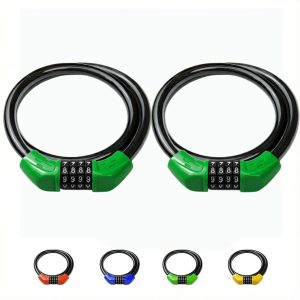
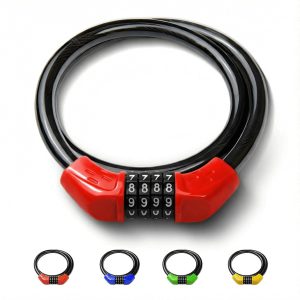
| Subject | 5-Digit Combination Chain Lock 1m | Measure on your own bike |
| First check | Each link is 6mm hardened steel inside a fabric sleeve. | Listing specification, as at 2026-11-04 (AEDT) |
| Key measurable terms | 6mm, hardened steel, 1 metre, five-digit | Tape measure, scales, or valve/wheel check |
| Typical situation | longer stops where a cable alone is not enough | Your own parking time and location |
| Review sample | 983 competitor reviews | Corpus text match, not a defect rate |
| Independent testing | None on this page | We do not run a test programme |
We do not publish a ranked list because we do not run an independent test programme. The comparisons below are structural, not measured.
What problem are you actually solving
A rack, a frame and a wheel make three objects to secure. Most buying advice about a 1m six-millimetre chain lock quietly assumes there is only one.
A wrong decision here tends to show up as a small daily irritation rather than one dramatic failure, which is why it is easy to ignore.
Complaints cluster around everyday handling rather than extreme conditions. That tells you where to spend your checking time.
IP ratings describe water ingress, not brightness. Lumens describe output, not how far you can see. The numbers are not interchangeable.
Decide by situation, not by ranking
If you are leaving the bike for only a few minutes in a busy place, portability and speed of use usually matter more than maximum resistance.
If the bike stays out of sight for an hour or more, reach and shackle construction start to dominate the decision.
If the bike is expensive or left overnight, treat a single cable as a secondary lock rather than the primary one.
Specifications that matter
Where a listing gives a range, check both ends. The chain is about 1 metre long, enough to pass through a frame and a rear wheel.
Check the measurable specifications first: Each link is 6mm hardened steel inside a fabric sleeve. That single detail changes how the device behaves at a crowded rack.
The listed construction is The chain is about 1 metre long, enough to pass through a frame and a rear wheel. Compare that against where you park, not against a marketing claim about overall strength.
| Specification | Listed value | Why it matters |
|---|---|---|
| 6mm | Each link is 6mm hardened steel inside a fabric sleeve. | Check against your bike and where you park |
| hardened steel | The chain is about 1 metre long, enough to pass through a frame and a rear wheel. | Check against your bike and where you park |
| 1 metre | The fabric cover reduces rattling and protects the frame from scratches. | Check against your bike and where you park |
| five-digit | A five-digit code removes the need to carry a key. | Check against your bike and where you park |
Two lights with the same lumen figure can behave differently on the road because beam pattern and mounting height change what the rider actually sees.
More modes on a light are not automatically better if the rider has to cycle through all of them to switch the unit off.
Related products:
- View 5-Digit Combination Chain Lock 1m — product details
- View Heavy Duty U-Lock 19mm with Cable — product details
What buyers actually report
The corpus behind this page holds 983 competitor reviews. We use it to describe how buyers phrase a problem, not to estimate how often the fault occurs.
“Do you want your things to be stolen?” — UGC-00212, 1 star, Amazon US, 2025-11-04
Read this as one buyer’s observation. It is evidence of a question worth checking, not evidence of a defect rate.
“El producto en sí no te va ayudar en que no te la roben, pero si que te hace ganar un poco de tiempo si estás cerca y” — UGC-00249, 3 star, Amazon US, 2025-05-17
Two reports using similar language suggest a shared failure mode, but they still do not establish how often it occurs.
“U Lock looks sturdy , can’t say about the key lock, cable might be vulnerable to bolt cutter.” — UGC-00283, 2 star, Amazon IN, 2024-09-04
The rider describes an everyday handling problem, which is exactly the kind of failure a specification table does not predict.
This page uses the 983-review corpus qualitatively; the exact phrase “main types locks” is not quantified because a phrase match would not be a reliable measure of how common the problem is.
A checklist cannot tell you what a thief will do. It can only remove the avoidable mistakes from your own setup.
The vocabulary buyers use
In the 573-paragraph corpus of real cycling articles behind this site, the “scenarios & audiences” word group appears most often in specification, comparison and problem paragraphs. These terms are counted from actual article text, not suggested by a keyword tool; none of them represents a search-volume estimate.
| Term observed | Occurrences in this paragraph role | Distinct articles |
|---|---|---|
| riders | 3 | 3 |
| car | 2 | 2 |
| riders | 4 | 4 |
| ground | 2 | 2 |
| ground | 3 | 3 |
| cyclists | 2 | 2 |
Treat this as vocabulary evidence only. It tells you how the topic is written about, not how often it is searched, and it carries no ranking or traffic estimate.
Checks to run before you commit
- Fit the part loosely, align it, then tighten in stages. Repeat the full cycle and watch for movement at the contact points.
- Note the valve or wheel size on your bike, then compare it with the compatibility line. Do this before the packaging is discarded.
- Charge or cycle the device fully once, then test it again after a week. Several buyer reports describe a fault appearing in that interval.
Australian conditions and everyday scenarios
With a train platform where the bike is out of sight for an hour, the failure tends to appear during the second or third week, once the initial fit has settled and the mount has been disturbed a few times.
In an apartment bike store with no wall rail, the device is handled twice a day. Small parts such as straps, caps and keys see more cycles than the main body.
Buying the strongest item and leaving it at home is a common outcome. Portability belongs in the decision, not as an afterthought.
Related checks on this site
- specification and availability for 5-digit combination chain lock 1m
- for overnight or high-risk parking — upgrade path
- what 983 competitor reviews say about failure patterns
- how we describe lock capability without claiming a rating
- Bike Unlocked Explained Without the Hype
- Folding Lock: The Checks That Actually Matter
- Bike Light Laws Australia for Station Racks: What Riders Should Verify — S-C guide
- Why Bike Lock for Scooter Matters More Than You Think — S-B guide
Frequently asked questions
Can I fit this to my bike without changing other parts?
Check the fit and the mechanism first, because most reported faults are installation or reset issues rather than broken components.
Why did it work at first and then stop working?
No. A specification describes a design limit, not a guarantee of performance in a particular situation or over a particular period.
Where a figure comes from a government or industry source, the source and the date it was checked appear at the end of this page.
Does the listing specification match what I should measure on the bike?
Measure it on your own bike, with the rack you actually use. Published dimensions are a starting point, not a substitute for that check.
What is the difference between a fit problem and a faulty part?
Keep the proof of purchase and test every function inside the return window. Several reports in our sample describe a fault found just after that window closed.
Sources, method and last verified
- Review corpus: 983 competitor reviews supplied for this site; quoted excerpts are verbatim and identified by review id. See the method page.
- ProductReview.com.au, Best Road Bikes in 2026 as reviewed by Australian consumers – ProductReview.com.au — https://www.productreview.com.au/c/road-bikes
- Storage Vault, Bike Storage in an Apartment Car Park – Storage Vault — https://storagevault.com.au/bike-storage-apartment
- Reddit (via road.cc), Guess I’ll get the bus then; Bike stolen right in front of me in gated development — https://road.cc/content/news/cycling-live-blog-16-may-2025-314019
- Product specifications: retailer listing transcription, checked 2026-11-04 (AEDT).
Specifications on this page are transcribed from the retailer listing as at 2026-11-04 (AEDT). They are not the result of independent testing.
Review excerpts are quoted verbatim from a corpus of competitor reviews supplied for this site. They describe third-party products, not our own.
We do not claim any third-party security rating, certification or endorsement for our own products.
Last verified: 2026-11-04 (AEDT). Search volume, keyword difficulty and AI citation rate: not available (TBD).
The short version
Specifications help only after the problem is defined. Define the problem first, then use the table above, then decide.
Related products:
- View 5-Digit Combination Chain Lock 1m — product details
- View Heavy Duty U-Lock 19mm with Cable — product details



Have a question?